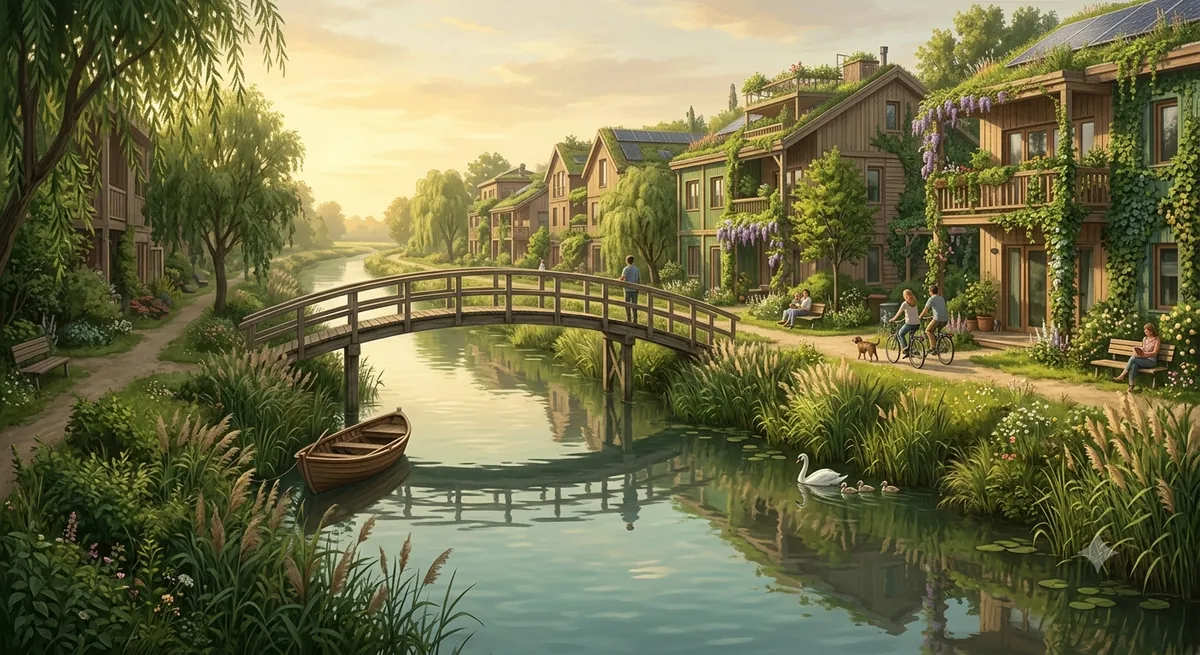
Not cut off from the world, but self-reliant in the essentials. Every city covers its own basics first, so it stands on its own feet when times get rough.
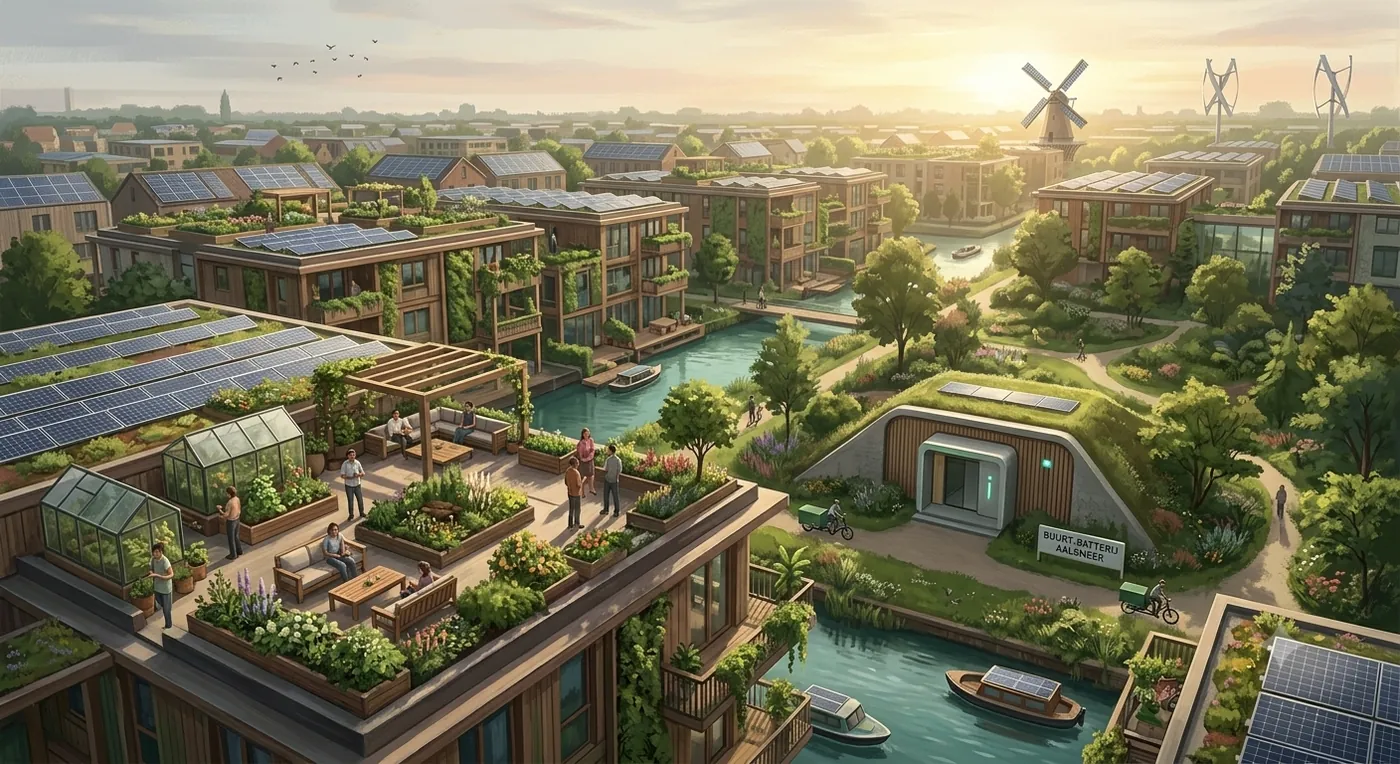
Solar panels across the whole city, with batteries per district that carry the evening and the peaks. By day the city largely runs on sun. Those district batteries are doubly clever, because a district can disconnect during an outage and keep running on its own.
Nuclear power is not ruled out as a clean backstop, topping up the batteries when the sun falls short. And the great hidden energy hog, heating and cooling, comes from the ground through seasonal heat storage, supplemented with waste heat from the incinerator through the heat network.
Rain is caught in canals, swales and ponds that are nature, cooling and storm buffer at the same time. That water is used, treated, and put to work again.
The find that ties it all together: the same treatment that cleans your water feeds the plants in the nurseries. Water becomes one cycle linking drinking, cooling and food.
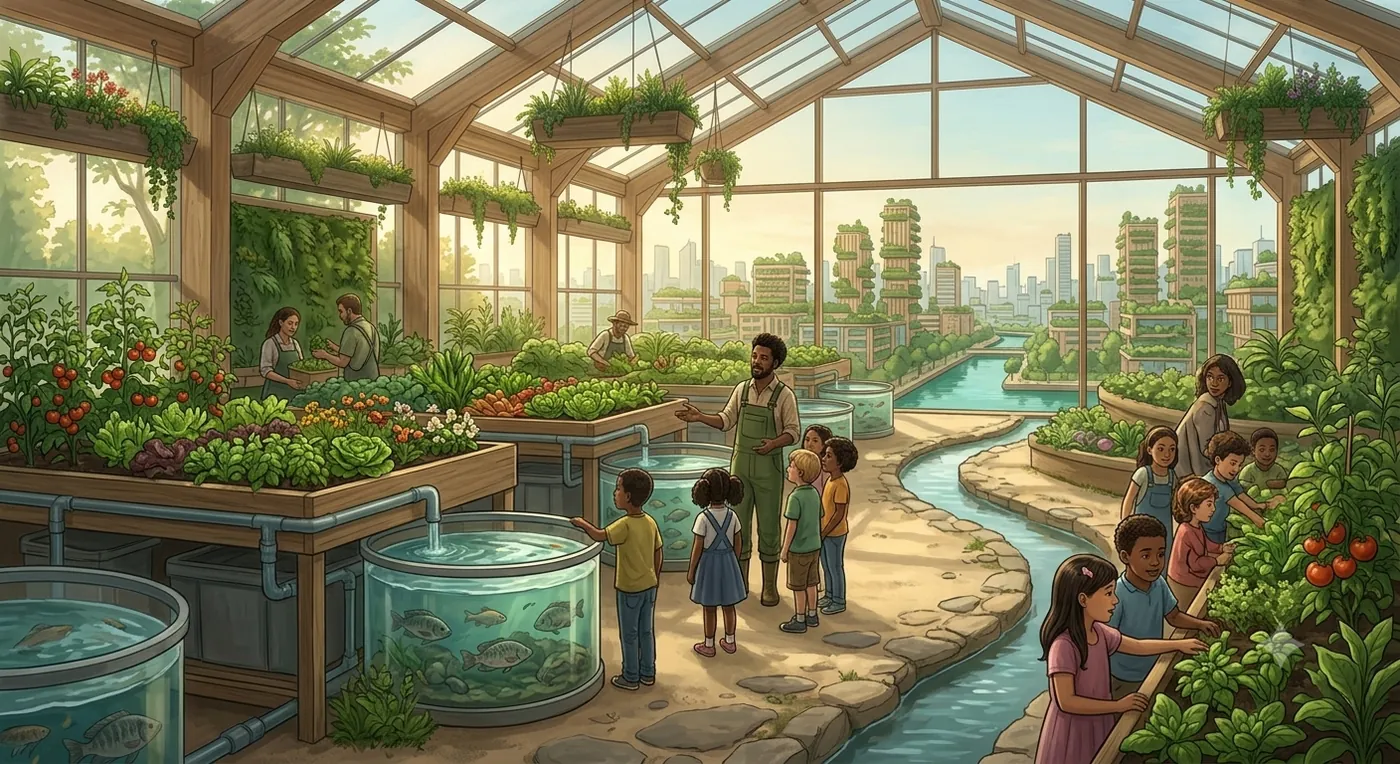
Farms and greenhouses sit in the greenbelt around the city and belong to it, much as the Netherlands is already a greenhouse superpower. Vegetables come partly from aquaponics, tied into the water cycle.
The diet leans on plants, with animal protein partly replaced by alternatives. Meat is not banned, because the city offers more choices and better defaults, not rules. Lab-grown meat will probably not arrive in time, so we do not count on it.
Residents separate their own waste, strictly and in multiple streams, as in Japan. You bring it to fixed neighbourhood points, the same place where you collect your parcels, and those are emptied underground by autonomous vehicles. No refuse truck ever drives down the street.
Food scraps and green waste become compost and biogas that feed the greenhouses. Things get repaired first, in the workshop around the corner, and manufacturers must make their products repairable and take them back at the end. Whatever remains is incinerated with thorough filtering, and that heat warms the city.
Even buildings take part: they are designed to be taken apart, so a building that changes yields materials instead of demolition waste.
Within the network every city may specialise, but self-reliance in the basics comes first. Because food, energy and water run locally and largely automated, the city stays standing even when a large share of its people temporarily cannot contribute. Survival is decoupled from the economy: the sun shines and the cycle turns, however many people are at work.
And you move through it without crowning the car. Read how.
To Moving around