A city to live the way people are meant to
Water instead of asphalt, neighbours instead of strangers, and a life you earn with what you contribute, not with your bank balance. A concept for a network of livable cities, 15 to 30 years ahead.
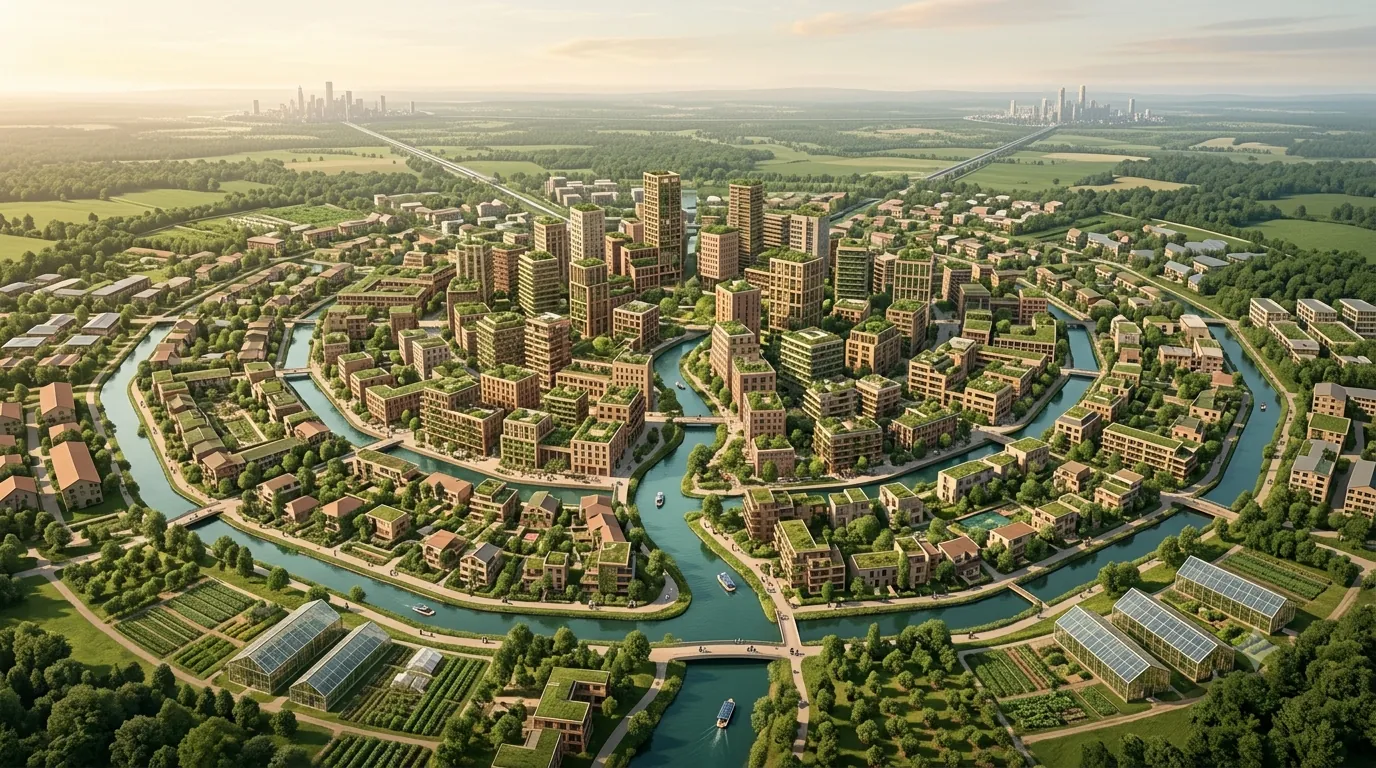
Water instead of asphalt, neighbours instead of strangers, and a life you earn with what you contribute, not with your bank balance. A concept for a network of livable cities, 15 to 30 years ahead.
The city is built around the people who live there. The heart is for those who want to be in the middle of it all; the edges, with small hamlets and private gardens, are for those looking for space. Every district has its own face, from timber and greenery to concrete slowly reclaimed by nature.
One idea runs through everything: the good choice is made the easiest one, without banning the others. Car-light, not car-free. Plant-leaning, not diet rules. Contribute for better, never work or go hungry. More choices, better defaults, no coercion.
Concentric, but organically grown, no compass circles. Denser and taller in the middle, more open and greener towards the edge, with water winding through every ring like a river.
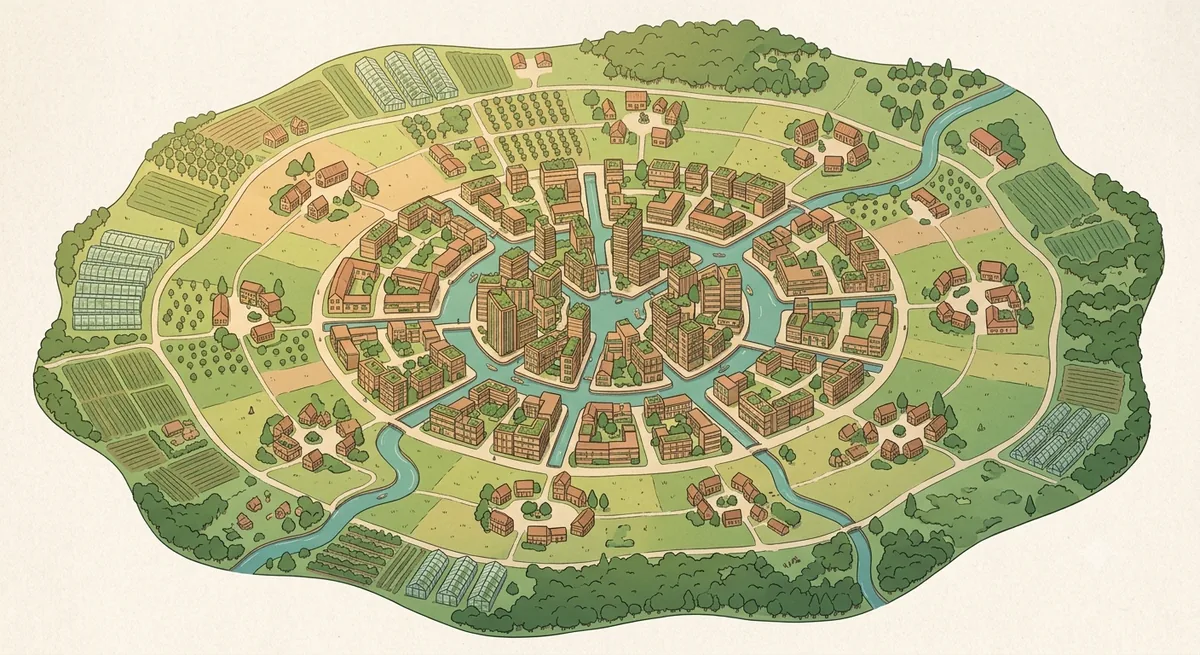
Every scale has its own transport: walking and cycling in the neighbourhood, pods within the city, a high-speed line between the cities. The bicycle is deliberately made unbeatable: the straightest routes, its own bridges, priority everywhere.
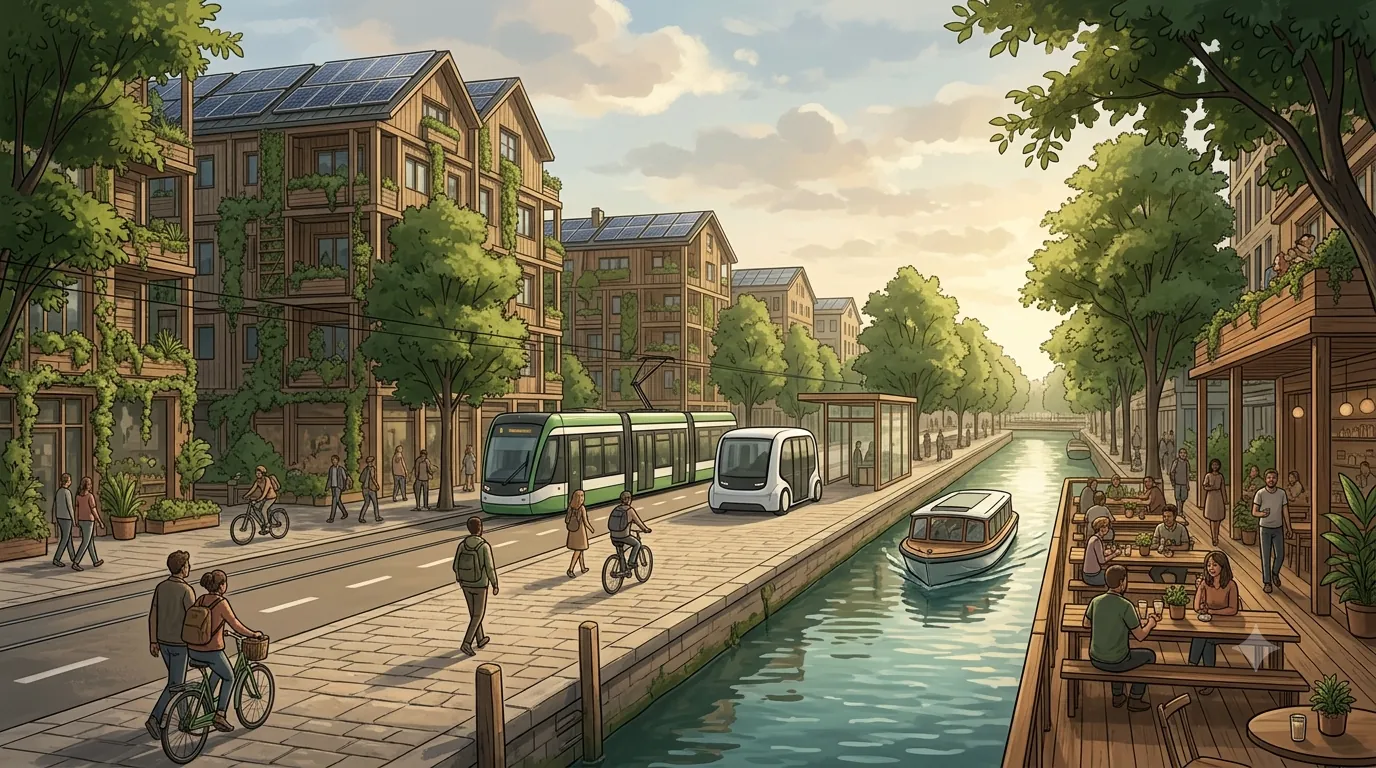
The fastest and most pleasant way from A to B. Shared bikes and cargo bikes wait at every stop.
On demand, point to point. At rush hour they couple into a train and peel off again towards each hamlet.
A high-speed line joins the cities into one network. Cars stay underground, with parks on top.
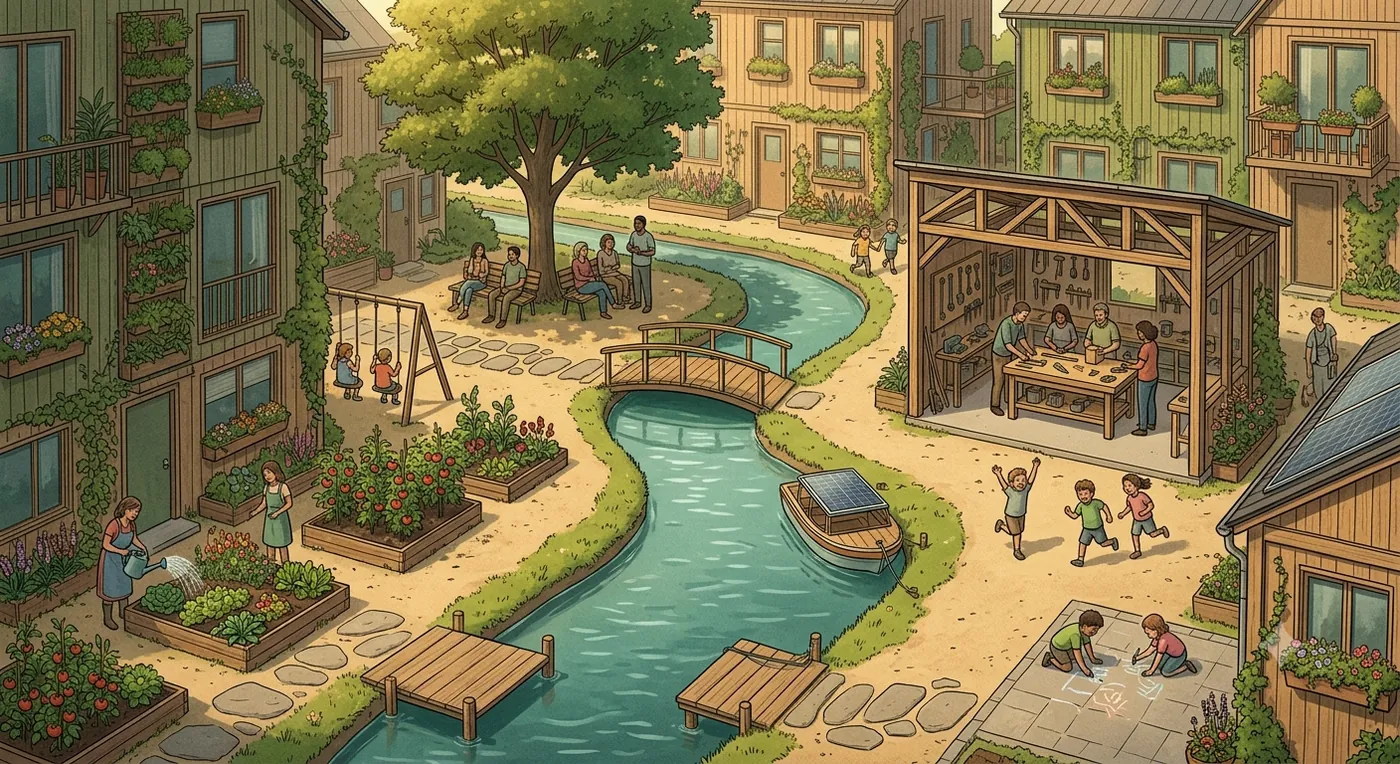
Your house is truly yours. No landlord above you, and the city is governed by the people who live in it. The land stays with the community, the bricks are yours.
Better homes are earned with credits: your effort for the community decides who comes first, not your bank balance. Credits cannot be bought or sold. Whoever contributes gets ahead, whether you teach, care, build or grow.
Not one city but several: each equal, each with its own character, separated by greenery and farmland so they never merge. Beads on a string.
Cities specialise in what they do well, but cover their own essentials first: food, energy, water. That makes their interdependence a choice, not a necessity. Robust and connected.
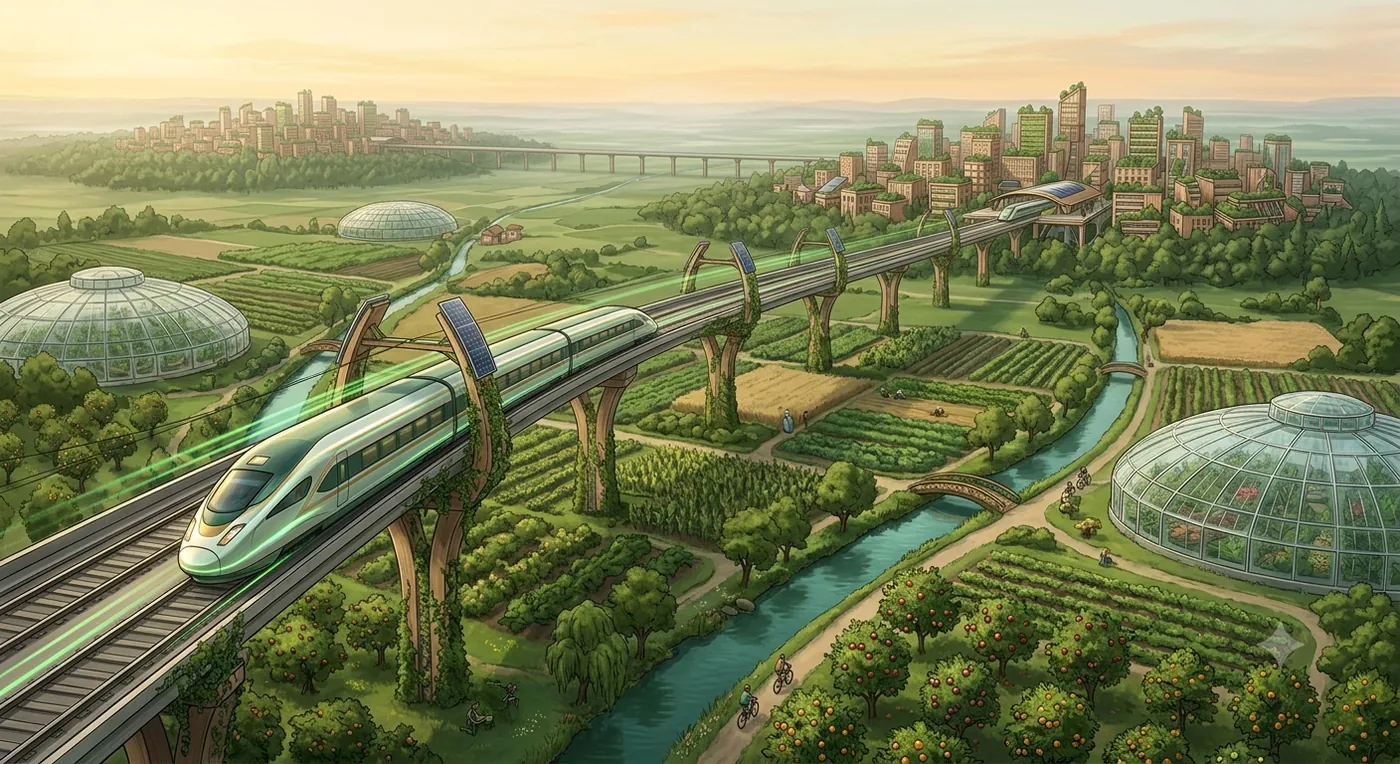
Loose notes while the vision takes shape.
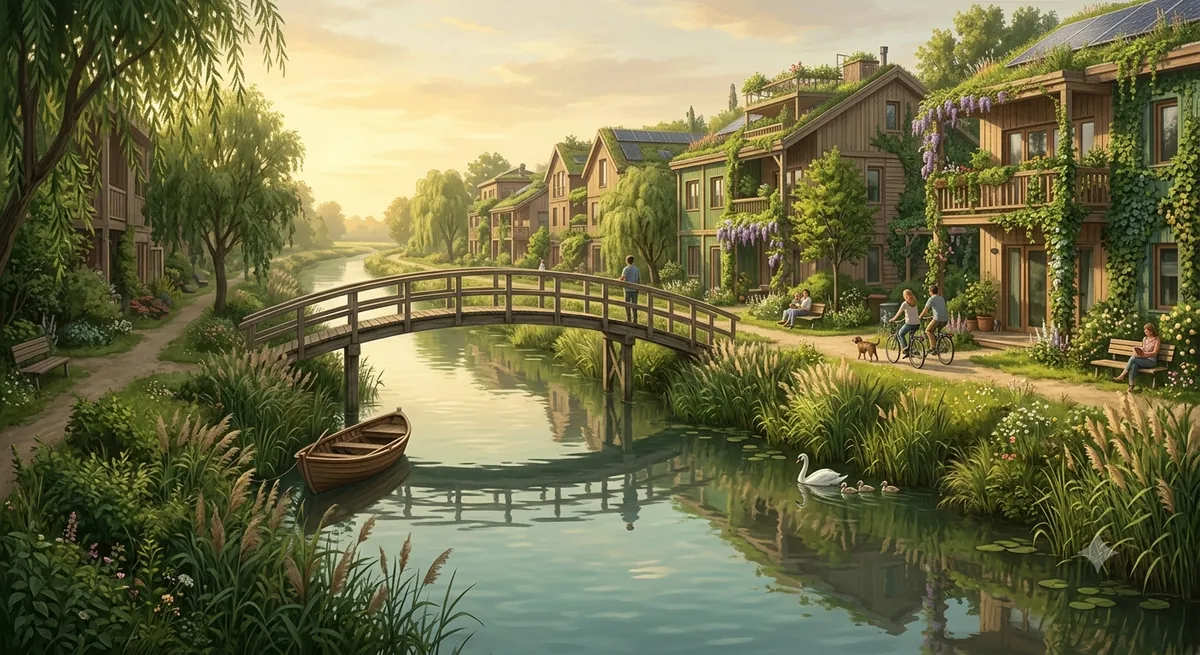
From Utrecht-style canals to a cycle linking treatment and food. Water is not one element, it is the bloodstream.
Read more →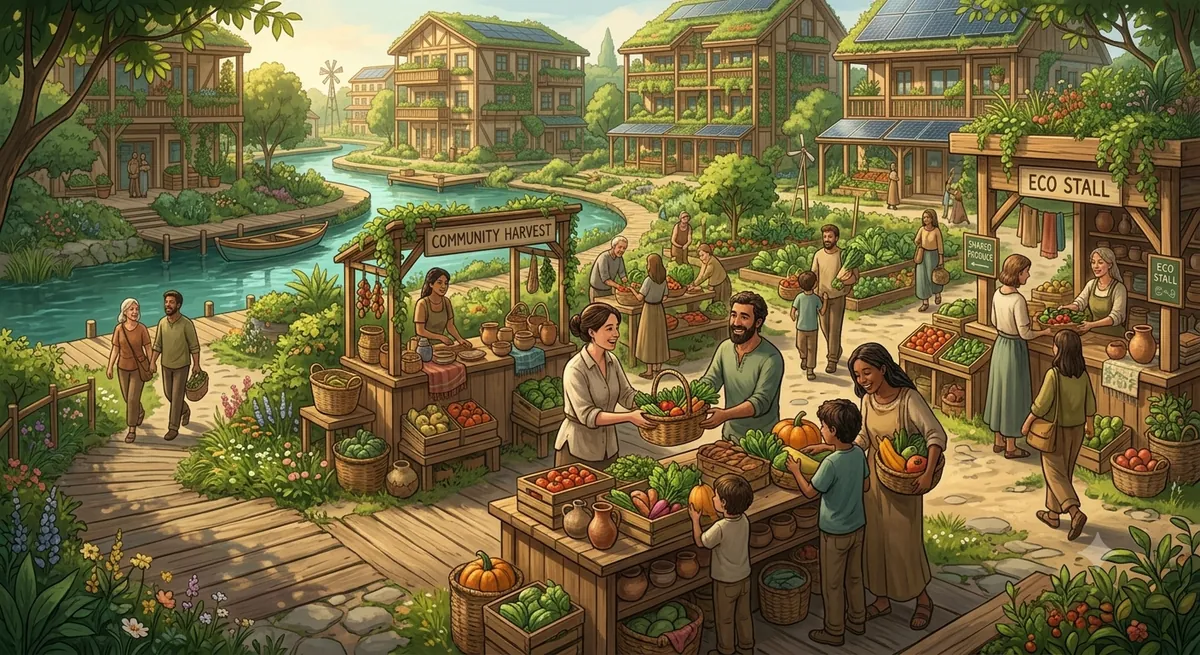
How to divide a city fairly without crowning money, and why credits must never be for sale.
Read more →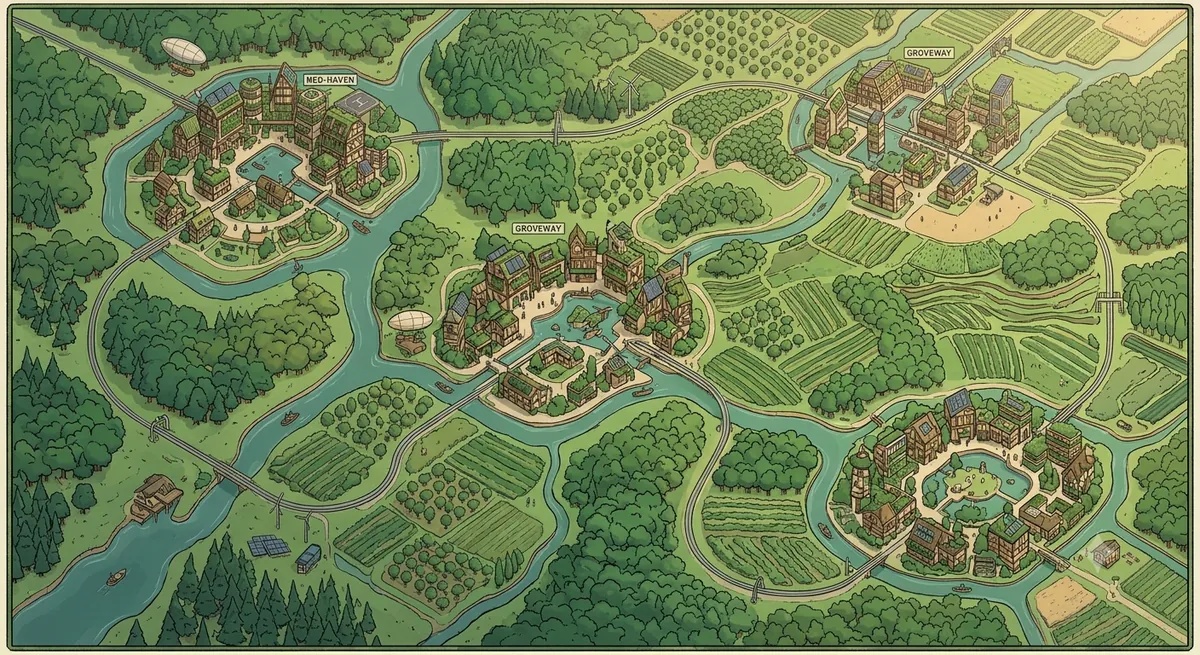
From one city to a cluster of equal cities joined by a high-speed line. Howard thought of it first.
Read more →That is exactly the point. Think along, push back, and help build a place where livability and community come first.
Care to join?